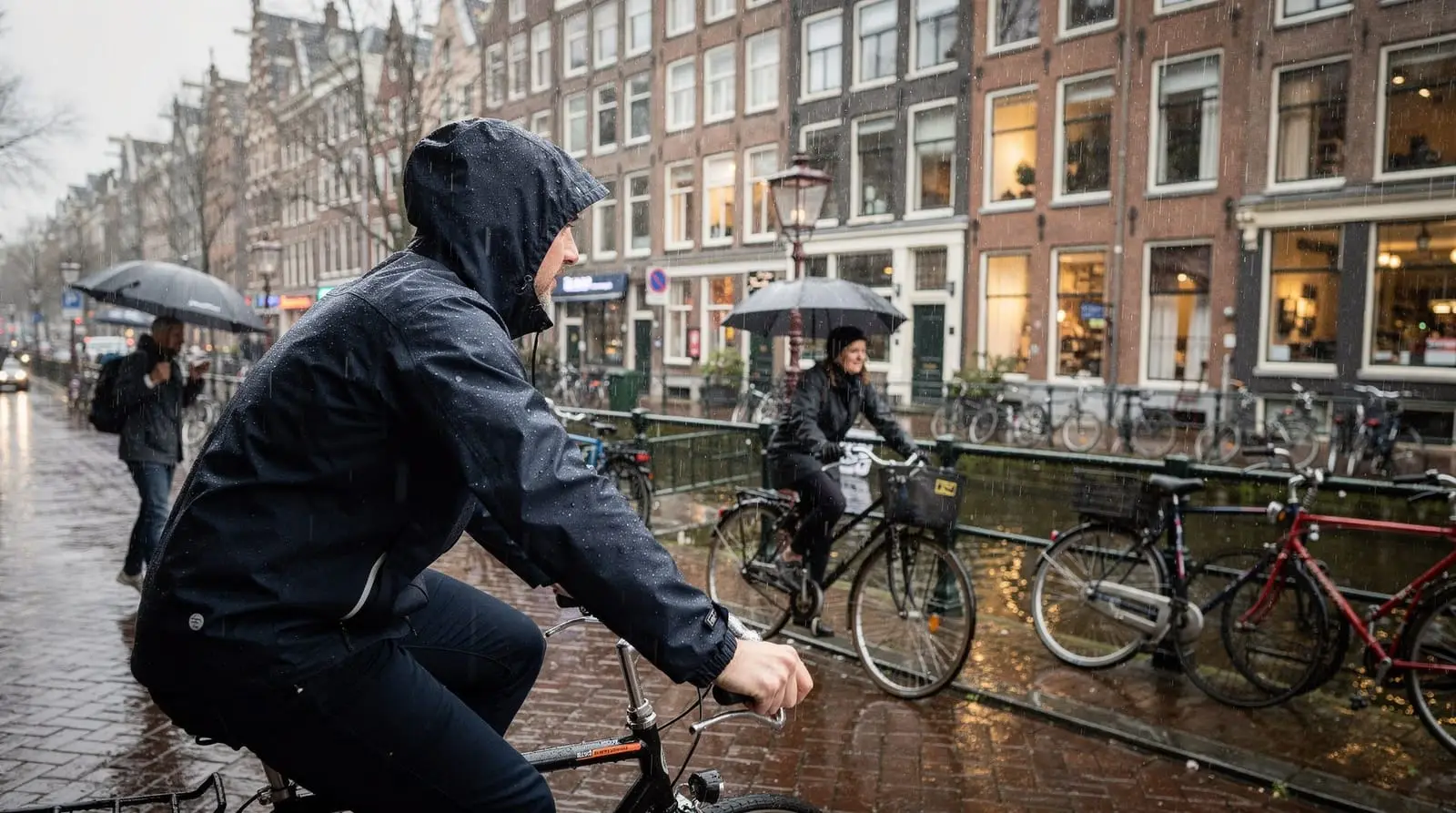
Amsterdam packing guide — what to bring in every season
What should I pack for Amsterdam?
A waterproof jacket is essential year-round. Comfortable walking shoes (cobblestones everywhere), layers for changeable weather, and a compact day bag. Leave the umbrella at home — wind makes them useless.
The Amsterdam packing philosophy
Amsterdam has an oceanic climate: mild, wet and variable year-round. The city averages 164 rainy days per year. Rain in Amsterdam typically comes as light drizzle rather than heavy downpours, but it can happen at any moment regardless of forecast.
The other key factor is cobblestones. Amsterdam’s historic streets are paved with centuries-old stones that are charming to look at and painful on poorly-soled shoes. And if you plan to cycle — which you should — your footwear choices matter.
Pack light, layer intelligently, and prioritise waterproofing.
| Climate | Oceanic — mild, wet, changeable year-round |
| Rainy days | Around 164 per year, mostly light drizzle |
| Key item | Packable waterproof jacket with a hood |
| Skip | Umbrellas (wind makes them useless) |
| Footwear | Cushioned, waterproof shoes for cobblestones |
For a season-by-season breakdown of weather and crowds rather than just what to pack, see the best time to visit Amsterdam guide.
Amsterdam by season at a glance
| Season | Temp | Rain | What defines the packing list |
|---|---|---|---|
| Spring (Mar–May) | 10–17°C | Frequent | Tulip-field footwear, layers for King’s Day |
| Summer (Jun–Aug) | 18–24°C | Sudden showers | Compact rain jacket over sun gear |
| Autumn (Sep–Nov) | 8–20°C | Steady, increasing | Wool layers, water-resistant shoes |
| Winter (Dec–Feb) | 2–8°C | Damp, occasional sleet | Thermal layers, waterproof boots |
Details for each season below, plus links to our full seasonal guides: spring, summer, and winter.
The year-round essentials
These items belong in your bag regardless of when you visit:
Waterproof jacket with a hood. This is non-negotiable. A lightweight packable waterproof (Gore-Tex or equivalent) weighs almost nothing and saves multiple days of soggy museums. A hood is important — Amsterdam’s canal wind makes umbrellas impractical.
Comfortable walking shoes or trainers. You will walk 10–18 km per day in Amsterdam. Fashion shoes on cobblestones lead to sore feet and blisters. Cushioned soles are important. Waterproofing is a bonus.
Light day bag or backpack. For museum visits, lunches and cycling. Nothing too large — Amsterdam museums have strict bag-size rules and many require large bags to be checked in. Planning a visit to the Rijksmuseum or the Van Gogh Museum? Check the practical details in those guides before choosing your bag.
Layers. Even in July, Amsterdam evenings cool to 14–17°C. A midlayer (fleece or light down jacket) fits under your waterproof for cold days.
Portable phone charger. Maps, tickets, transit apps and constant Google Maps usage drain a battery. A 10,000mAh powerbank is worth its weight.
Travel card holder/document wallet. Keep your passport, European Health Insurance Card or travel insurance documentation, and bank cards in one place.
What to leave at home
Umbrella. Wind-assisted rain from every angle makes umbrellas almost useless in Amsterdam. The locals don’t use them. A good waterproof jacket hood is better.
High heels or formal shoes. Unless you have a specific formal event, they are impractical on cobblestones and for tram boarding. Pack one smart-casual option at most.
Towel for beaches. There are no proper sandy beaches in central Amsterdam — the nearest are at Zandvoort (45 min by train). If that’s on your agenda, pack a small beach towel; otherwise skip it.
Heavy travel locks. Amsterdam accommodation is generally safe. A small cable lock for a day bag is sensible; heavy chain locks are overkill.
Spring packing list (March–May)
Spring is Amsterdam’s most popular season because of the tulips and King’s Day. Weather is 10–17°C with frequent rain.
Add to the year-round essentials:
- Mid-weight fleece or wool jumper
- Scarf (evenings and morning can be chilly)
- Waterproof trousers or walking trousers with some wind resistance
- Sunscreen (spring sun can be stronger than expected, especially at Keukenhof in open fields)
- Camera with a polarising filter or phone photography setup — tulip colours in direct light need contrast management
For Keukenhof and tulip fields: If you are visiting Keukenhof or tulip fields, sturdy walking shoes are essential — the paths between flower beds can be muddy after rain. A waterproof over-layer is recommended since you will be outdoors for 3–4 hours. See our Keukenhof day trip guide for timing and logistics.
For King’s Day (27 April): The city is a sea of orange. Pack an orange item — it need not be elaborate, even a scarf or hat makes you part of the festivities. Expect crowds and canal-side celebrations.
Summer packing list (June–August)
Summer in Amsterdam is warm (18–24°C) with long daylight hours (sunset after 21:00 in June–July). It is also the busiest and most expensive season.
Add to the year-round essentials:
- T-shirts and light tops for warm days
- Sunscreen (SPF 30+)
- Sunglasses
- Compact fold-up rain jacket (the key summer addition — warm days can turn wet suddenly)
- Light trainers or walking sandals
Summer visitors often over-pack heavy items thinking it will be warm the whole time. It usually is not. Keep your waterproof easily accessible rather than buried in your bag.
Summer is also the season for time on the water, and what you wear depends on the boat. On an open-top canal cruise with an optional drink you are exposed to sun, wind and the odd shower, so sunglasses, sunscreen and your packable jacket all earn their place; on a covered boat you can travel lighter. The open boat versus covered canal tours guide and the best canal cruises guide help you decide before you pack. For more on the season itself, see the Amsterdam in summer guide.
Cycling in summer: If you plan significant cycling, bring padded cycling shorts or buy them on arrival. Day rentals are basic city bikes — comfortable for an hour, but for full-day cycling tours you will appreciate the extra padding.
Autumn packing list (September–November)
September–October is Amsterdam’s sweet spot — lower crowds, reasonable prices, warm enough for terrace dining in early September.
Add to the year-round essentials:
- Mid-weight wool or fleece jumper
- Scarf and light gloves (from October onwards)
- Water-resistant walking shoes or low hiking boots
- Extra pair of socks — wet days in light rain are hard on feet
Early September can still be warm (17–20°C). By November you need proper layering: base layer, midlayer, waterproof outer.
Autumn suits museum days, when a wet afternoon is easy to spend indoors; our best museums guide and the rainy day blog post are useful for planning around the weather, and the autumn canal photography post is worth reading if you are bringing a camera. If you are unsure which weeks to choose, the Amsterdam first-time guide gives a wider overview of the trip.
Winter packing list (December–February)
Winter is cold (2–8°C), dark and often damp. Short days (sunset 16:30 in January) mean evenings feel long. Compensation: atmospheric brown cafés, the Amsterdam Light Festival and far fewer tourists.
Add to the year-round essentials:
- Warm winter coat (wool or down to mid-thigh at least)
- Thermal base layers
- Wool socks
- Warm hat and gloves
- Scarf
- Waterproof boots or shoe covers
The Amsterdam Light Festival runs approximately December–January and involves evening canal cruises in the dark — make sure you are warmly dressed. See our Amsterdam in winter guide for what to do in the cold months.
If you want to see the city lit up from the water, an option such as an evening canal cruise with wine and the city lights keeps you out of the wind for part of the trip, but you will still want your hat, gloves and scarf for boarding and for the walk back. Our Light Festival cruises guide and the evening canal cruises guide explain how to choose between boats, and the Light Festival boat blog post shows what the experience is like from a passenger’s seat.
Cycling-specific packing
If you plan to rent a bike, a few extra items make the experience better:
- Thin liner gloves — cycling in cool weather makes hands cold quickly; a thin glove layer helps without adding bulk.
- Compact rain trousers — for cycling in drizzle without getting your jeans soaked.
- Handlebar bag or pannier — most rental bikes have a rear rack; a small bag or basket is often included. Pack light for cycling days. The bike rental guide and the cycling etiquette and safety guide cover what to expect once you are in the saddle.
- Bike light — rental bikes in Amsterdam usually have them, but confirm when you pick up the bike, especially if cycling in winter when it gets dark by 16:30.
See our cycling in Amsterdam guide for everything about renting and riding bikes in the city.
Electronics and documents
Plug adapter: The Netherlands uses Type C (European round-pin, 220–240V). If you are coming from the UK or North America you need an adapter. Most laptops and phone chargers work on 220V — just check the label.
Travel insurance documentation: Keep digital and physical copies. Dutch hospitals are excellent but non-EU visitors without travel insurance face significant costs.
EHIC/GHIC (EU/UK citizens): If you have a European Health Insurance Card or UK Global Health Insurance Card, bring it — it covers emergency medical care.
Copies of your passport/travel documents: A photo on your phone is sufficient for most situations, but keep a physical copy somewhere separate from the original.
Planning ahead: transport and passes
Amsterdam is almost entirely cashless (see below), so what you need to “pack” for getting around is mostly digital: a contactless card or phone payment method, and possibly a transit card loaded before you arrive. The OV-chipkaart guide explains how public transport payment works, and if you plan to visit several paid attractions, sorting a city card such as the I amsterdam City Card before your trip saves queuing at each venue. Neither is a physical packing item, but both are worth arranging before you land. If you are arriving by air, the Schiphol to Amsterdam centre guide explains the first leg of your journey, and the Amsterdam travel budget guide helps you decide how much you need to bring. Whether the card is worth it depends on your plans, which the I amsterdam City Card worth it guide goes through.
Tipping: Not strictly required but appreciated — rounding up or adding 5–10% at restaurants is normal. Nothing to pack, but worth knowing before your first meal; see the tipping etiquette guide for specifics.
Frequently asked questions about packing for Amsterdam
What kind of shoes are best for Amsterdam?
Cushioned waterproof trainers or comfortable walking shoes are the best choice. You will walk 10–15 km per day on cobblestones. Fashion shoes or thin-soled sandals lead to sore feet quickly. If you want one smart option, choose leather ankle boots — waterproof, comfortable on cobblestones, and appropriate for restaurants.
Do I need warm clothes in July?
Bring at least one midlayer and a light rain jacket even in July. Amsterdam evenings in summer can be 14–17°C with a canal breeze. Outdoor terraces cool down quickly after 20:00. Most days are warm enough for a T-shirt but the weather can change within a few hours.
Is there an orange dress code for King’s Day?
Not strictly. Wearing orange (Koningsdag, King’s Day on 27 April) is traditional and makes you feel part of the celebrations — even a small orange accessory (scarf, hat, badge) is enough. The city is wall-to-wall orange and you will feel conspicuous without some nod to it.
Should I bring cash to Amsterdam?
Amsterdam is almost entirely cashless. Restaurants, shops, museums, trams and taxis all accept contactless card. Keep €30–50 for markets and a few traditional cafés that are cash-only, but you should not need much. Avoid airport currency exchange desks.
How big should my day bag be?
10–15 litres is ideal for museum visits — large enough for a jacket, water bottle and essentials, small enough to keep with you. Some Amsterdam museums have bag-size restrictions (typically 40×30 cm) for security reasons. Larger bags must be checked in.
Do I need a voltage converter for Amsterdam?
Usually not. The Netherlands runs on 220–240V with Type C round-pin sockets. Most modern phone chargers, laptop chargers and camera battery chargers are dual-voltage (check the label for “100–240V”) and only need a plug adapter, not a converter. Older hairdryers or straighteners without dual voltage are the main exception.
What should I pack for cycling around Amsterdam versus walking?
Cycling adds a few specifics on top of the walking basics: thin gloves for cool mornings, compact rain trousers, and a bag or basket-friendly setup rather than a bulky backpack. If you’re deciding between renting a bike or sticking to trams and walking, the getting around Amsterdam guide compares the options and can help you pack accordingly.
Related guides

Amsterdam travel budget — how much does a trip cost in 2026?
Honest breakdown of Amsterdam costs by day: backpacker €75–100, mid-range €150–220, luxury €250–500+. Accommodation, food, transport and entry fees.

Amsterdam first time guide — essential tips for your first visit
Everything first-time visitors need to know about Amsterdam: where to go, what to skip, how to get around and what makes the city special.

Amsterdam safety guide — is Amsterdam safe and what to watch out for
Amsterdam is a safe city for tourists but pickpocketing and cycling hazards are real. Honest advice on the scams, the safe neighbourhoods and what locals

How many days do you need in Amsterdam?
3 days covers the highlights; 5 days adds depth and day trips. Here's an honest breakdown of what you can realistically see in 1 to 7 days.